Skip to content
Review

Short-chain fatty acids as molecular bridges between the gut microbiota and systemic inflammation: mechanisms, organ-specific axes, and therapeutic opportunities

Xueting Li ¹ ᵃ, Fang Yin ¹ ᵇ, Qiyi Chen ᵇ, Chunfu Zheng ᶜ

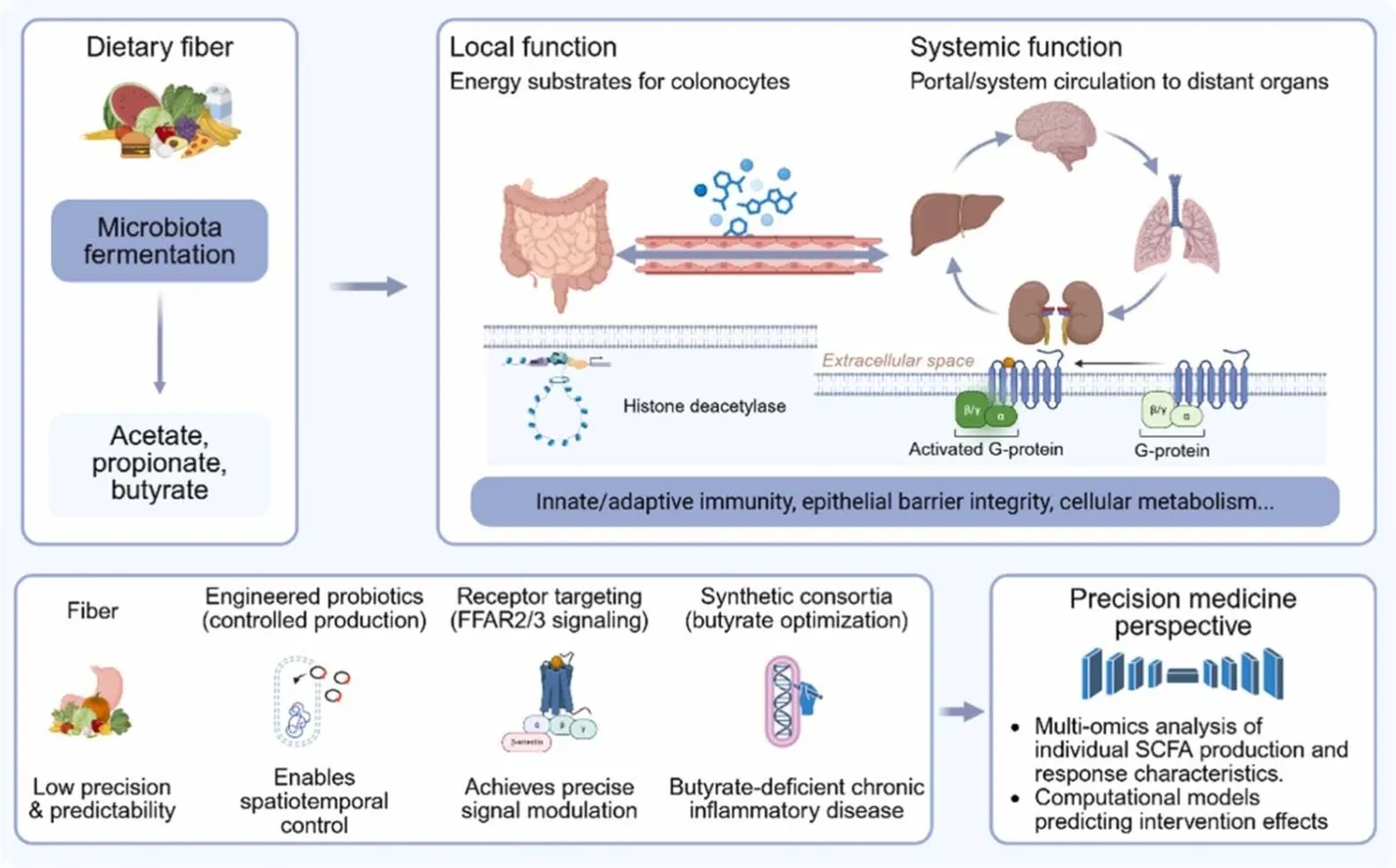
Graphical abstract — Short-chain fatty acids as molecular bridges between the gut microbiota and systemic inflammation: mechanisms, organ-specific axes, and therapeutic opportunities
Graphical abstract

Highlights

  • SCFAs are critical immunometabolic signals linking gut microbiota to host inflammatory status.
  • SCFAs act as molecular bridges to regulate inflammatory responses across multiple distant organs.
  • Targeted SCFA-centered interventions hold promising translational potential.

Abstract

The gut microbiota plays a fundamental role in maintaining host physiological homeostasis. Among the diverse metabolites produced by intestinal microbes, short-chain fatty acids (SCFAs) represent one of the most functionally significant groups. These metabolites arise primarily from the fermentation of non-digestible carbohydrates and serve as a major interface between microbial metabolism and host signaling.

SCFAs possess anti-inflammatory properties in the intestinal microenvironment, promoting regulatory T cell differentiation and immune tolerance, and strategies aimed at increasing SCFA availability have been explored clinically. Traditionally viewed as local energy sources for colonocytes, SCFAs are now recognized as systemic signaling molecules capable of influencing distant organs.

After absorption, they enter the portal circulation and reach peripheral tissues, where they modulate immune responses, metabolism, and tissue homeostasis. This review therefore mainly elaborates on the functions of SCFAs in various inter-organ axes as well as related therapeutic strategies.

Short-chain fatty acids Gut microbiota Systemic inflammation Immunometabolism Inter-organ axis

Affiliations

  1. a. Department of Gastroenterology, Shanghai Institute of Pancreatic Diseases, National Key Laboratory of Immunity and Inflammation, Changhai Clinical Research Unit, Changhai Hospital, Naval Medical University, Shanghai 200433, China
  2. b. Research Institute of Intestinal Diseases, Shanghai Tenth People’s Hospital Affiliated to Tongji University, Shanghai 200072, China
  3. c. Department of Microbiology, Immunology, and Infectious Diseases, University of Calgary, Calgary, Alberta, Canada

More from TransMed